


Small Kitchen, Clear Counters: A Routine That Works
35% off on product page · save $171.76
Small Kitchen, Clear Counters: A Routine That Works
Start With the Tasks Your Kitchen Needs to Handle
Locate the places where you prepare food, cook, wash up, and put groceries away. These tasks may all depend on the same short stretch of counter, but each still needs room to happen. For a few ordinary days, notice what you have to move before you can begin. Is mail covering the prep area? Do you shift appliances to unload groceries? Those interruptions tell you more than an empty drawer does.
Resist moving everything at once or buying organizers before you know the problem. Our team suggests choosing one friction point and trying a simple change, then seeing whether it helps during a real meal.
Match Each Kitchen Friction Point to a Simple First Move
| Friction point | First move | What to check afterward |
|---|---|---|
| No clear prep space | Move seldom-used items off the main work surface | Is there room to prepare a meal? |
| Tools are hard to find | Keep frequently used tools near the task they support | Can you reach them without shifting other items? |
| Food gets forgotten | Group like foods and bring older items forward | Can you see what should be used next? |
| Storage feels full | Remove duplicates and items that do not fit current routines | Is the remaining storage easier to use? |
Give the counter a job
Keep enough of your main work surface open to prepare a meal. An appliance you use often may earn a place there if you can operate it safely; one you use occasionally may be better stored somewhere you can reach without strain.
Keep towels, paper, and other combustible items away from cooking equipment. Follow each appliance manufacturer’s instructions for placement and use.
Featured in this guide
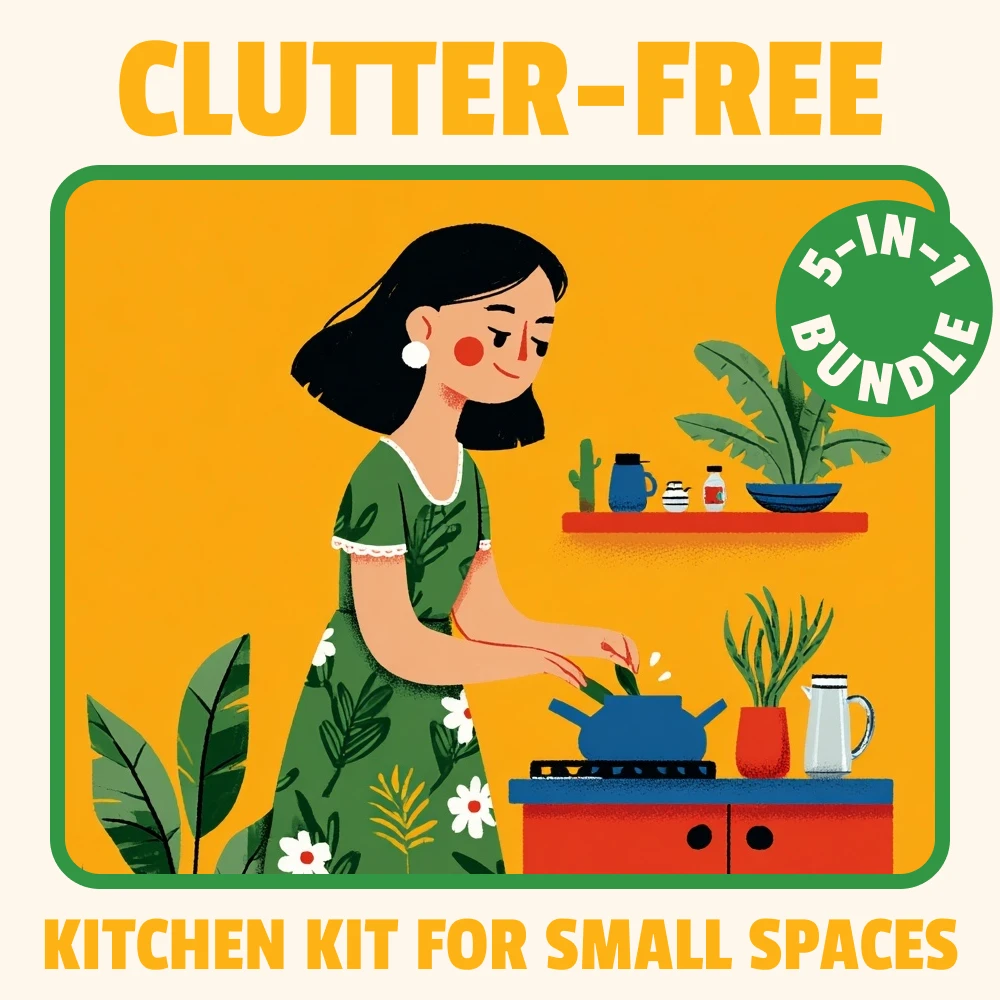
Clutter-Free Kitchen Kit for Small Spaces – 5-in-1 Digital Bundle | Making Your Tiny Kitchen Work Smarter
Organize for reach
Put everyday dishes, utensils, and ingredients where you can retrieve them comfortably. Reserve awkward shelves for lighter, occasional-use items rather than heavy appliances you would need to lift down.
Try grouping what you already own before buying physical dividers or containers. If you decide you need one, measure the usable space in the drawer or cabinet, including clearance around hinges and pipes.
Our Clutter-Free Kitchen Kit is a digital bundle, not a set of physical storage products. If you are also working on another small room, our Space-Smart Bathroom Organization Pack is a separate digital bundle.
Make the reset small
Once a week, look through the refrigerator and pantry for food you can use soon. Bring older items forward, group similar foods, and note what you already have before shopping. Discard food that is spoiled or otherwise unsafe.
Then return tools to their places and clear the prep surface. If one cabinet still slows you down, make that next week’s project rather than emptying the whole kitchen at once.
Decide whether a digital plan suits you
Our 5-in-1 Clutter-Free Kitchen Kit for Small Spaces may be a good fit if you want a structured digital starting point for making a tiny kitchen work smarter. If you prefer to experiment on your own, start with one surface or the cabinet you open most often. Use the new arrangement for a few days before changing anything else.

Watch · product page video
“Love this kit! My tiny kitchen has never been so organized. Highly recommended for small spaces.”
Splendalle product page · Product review
FAQ
What do minimalists throw away every week?
There is no required weekly list. In your kitchen, regularly remove trash and packaging, discard spoiled food, and review items you no longer use rather than throwing things away to meet a quota.
What kitchen trends will be outdated in 2026?
Trends change, but a kitchen arranged only for display can become frustrating if it leaves too little room to work. Choose storage and surfaces around your daily tasks rather than a prediction about what will look current.
How do I make my kitchen look less cluttered?
Clear the main prep surface, keep everyday items near where you use them, and give the rest a designated home. Aim for a kitchen that is easier to use, not merely emptier.
See if Clutter-Free Kitchen Kit for Small Spaces – 5-in-1 Digital Bundle | Making Your Tiny Kitchen Work Smarter fits your setup







Leave a comment